
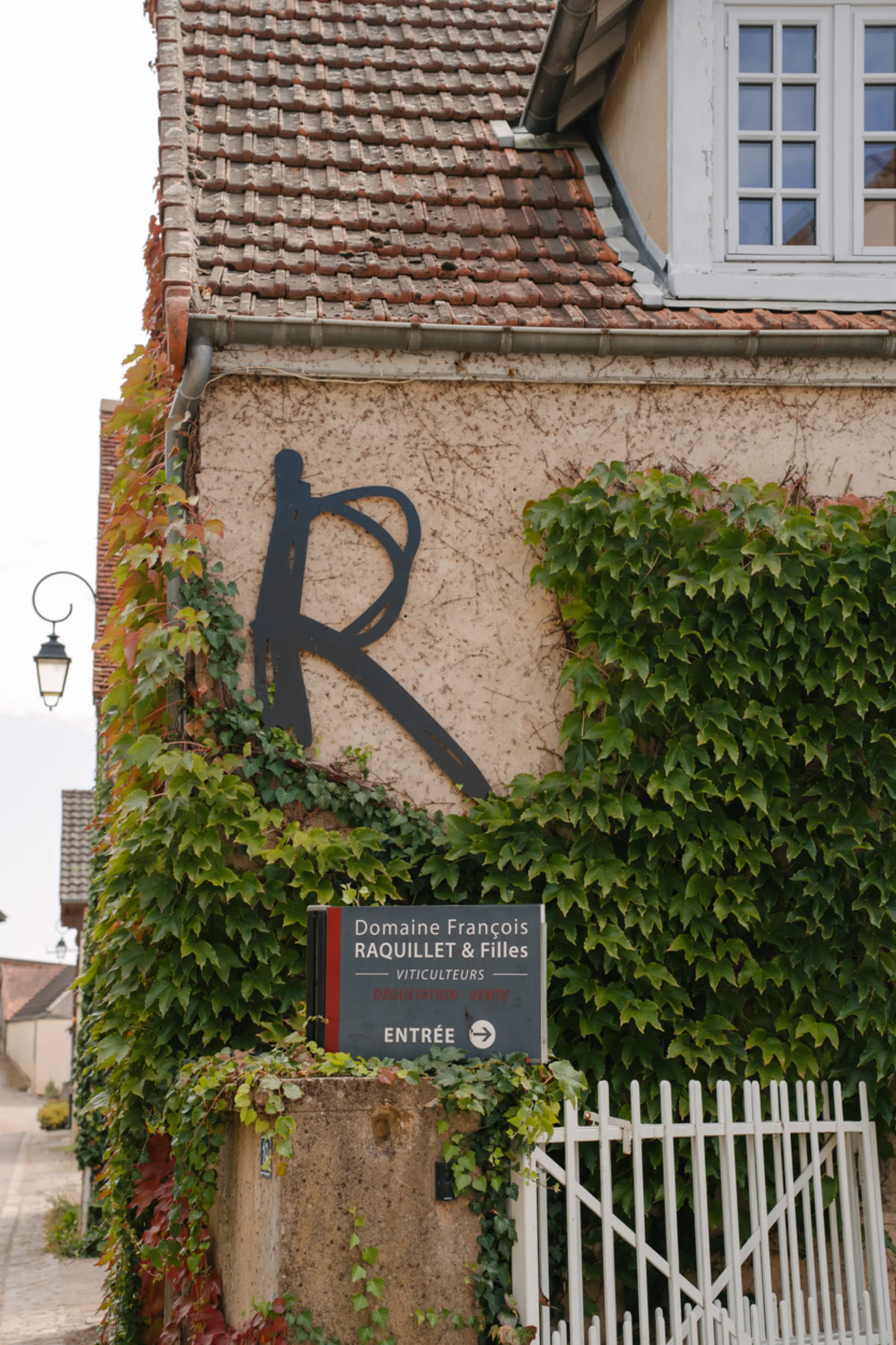
Domaine Raquillet in Mercurey
Twelve hectares of vines in Mercurey, a family of winegrowers going back 13 generations, and one conviction: wine is made first in the vineyard.
A family story
From father to son for 13 generations, and a daughter’s choice
Born into a line of winegrowers, François Raquillet began working the vines with his father in 1984 and took over the estate in 1990 with his wife Emmanuelle. From then on he made significant changes to how the estate works: lower yields, first-rate barrels.
The estate farms twelve hectares in the Côte Chalonnaise and offers a varied range of white and red wines. Since 2018 their daughter Jeanne has joined her parents on the estate.
Deep family roots
1984
François Raquillet begins working alongside his father, absorbing the family’s know-how.
1990
He formally takes over the estate with his wife Emmanuelle, making significant changes: lower yields and the introduction of high-quality barrels.
1994
Emmanuelle joins the estate alongside François, gradually building its administrative and commercial structure and bringing rigour, clarity and calm to daily life.
2016
The estate obtains its « lutte raisonnée » certification, affirming its commitment to environmentally respectful viticulture.
2018
Jeanne Raquillet, daughter of François and Emmanuelle, joins the estate, carrying the family tradition forward.
2022
A second star in the Guide Vert, in recognition of the consistent quality of the wines. The estate also takes a further step in its environmental commitment with HVE (High Environmental Value) certification, crowning years of practices respectful of biodiversity, soils and natural balance.
2024
The estate vinifies a new Premier Cru red, Les Combins, for the first time.
By the numbers
The estate at a glance
12 ha
of vines farmed in Mercurey
4,5 ha
classified Premier Cru
10 000
vines per hectare
40 / 50
hectolitres per hectare, red and white
The grape varieties
- Pinot noirMercurey red
- ChardonnayMercurey white
The classifications
- Village7 wines
- Premiers Crus8 wines
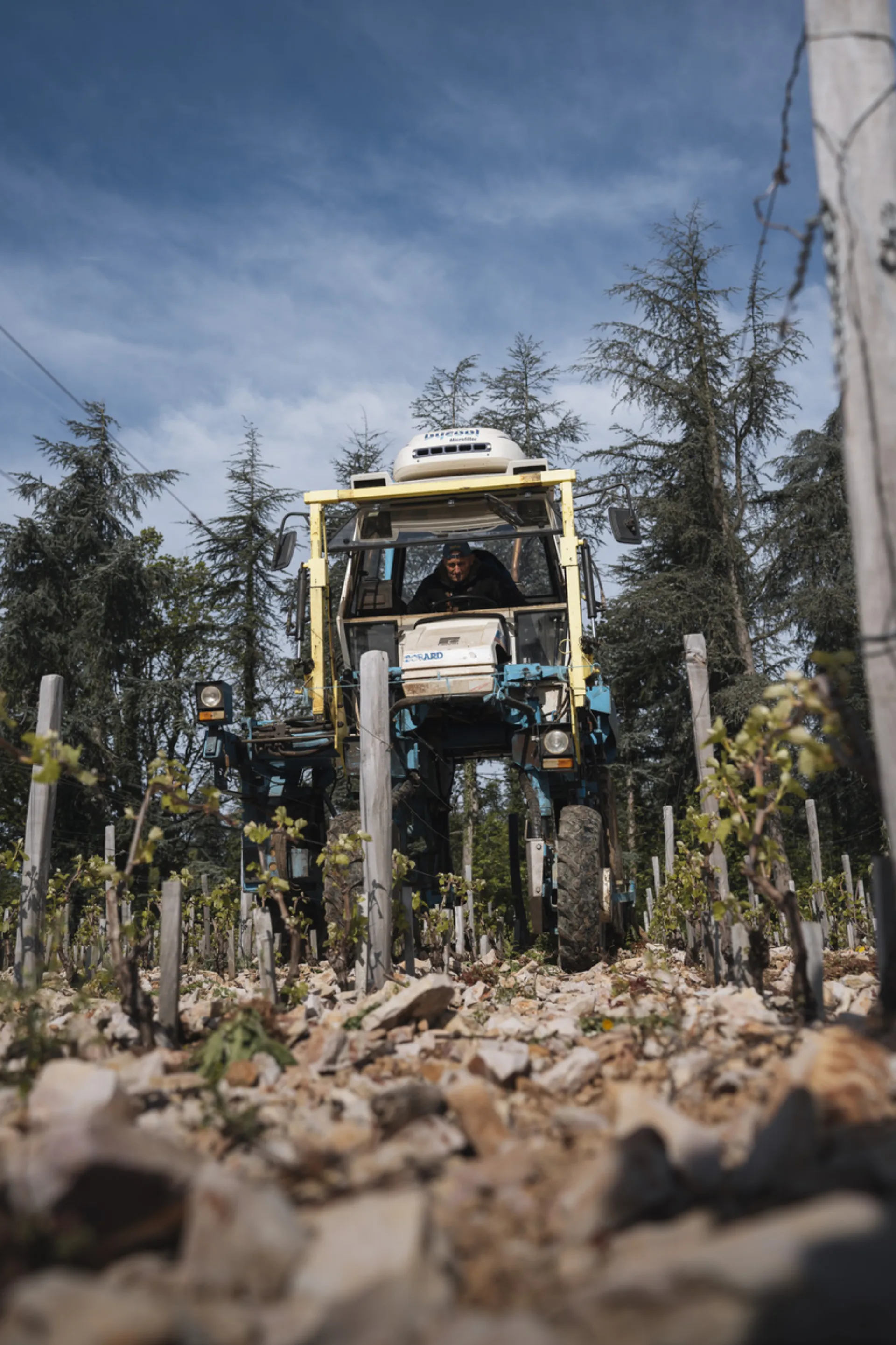
Ten thousand vines to the hectare sets the plants in competition: it lowers the number and size of the grapes, and concentrates the juice accordingly. The estate has farmed under sustainable viticulture since 2016 and holds High Environmental Value certification since 2022.
The terroir
Mercurey, 670 hectares of vines
The soil
A subsoil of deep marl gives the most structured wines. On stony soils born of decomposed rock, the wines turn suppler and finer. Between these two lies a wide range of nuance: white marls give a rich, weighty Chardonnay.
The terroir
The vines lie between 230 and 320 metres of altitude, across the marls and marly limestones of the Oxfordian. To the east, limestone and marl; to the west, a Jurassic structure and a crystalline basement covered in sandstone. On these white, chalky soils, or red and clayey ones, the vine finds warm affinities.
The grape varieties
Pinot Noir has small, tight bunches; its thin-skinned berries carry an intense colour with blue-black or deep violet glints. Chardonnay has small elongated bunches; its loose, well-spaced berries turn a magnificent gold at veraison and give a very sweet, fairly abundant juice.
Sunlight
The Burgundy vineyard, 150 kilometres long, enjoys conditions particularly favourable to the vine. The meeting of Mediterranean, continental and oceanic influences contributes greatly to the aromatic richness and worldwide reputation of its wines.
The appellation
The Mercurey appellation is sought out above all for its reds, but produces whites worth attention. It lies in the north of the Côte, extending the Rully vineyard. At 670 hectares it is the largest vineyard of the Côte Chalonnaise.
The craft
From pruning to bottling
01
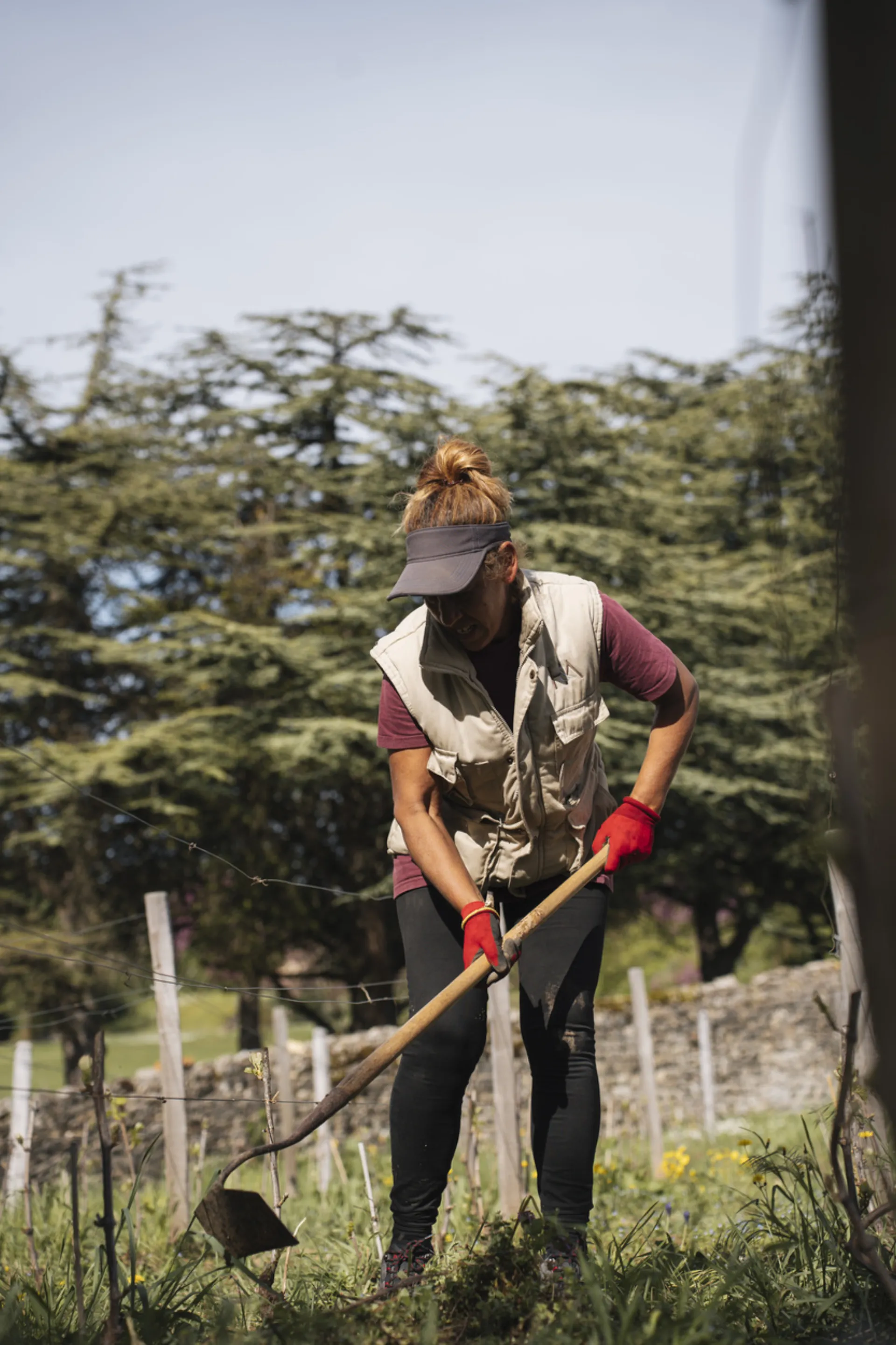
Working the vines
Painstaking work that begins in the vineyard with rigorous pruning and disbudding, and soil care that favours the balance of an ecosystem. For several years the soils have been worked alternating ploughing and cover crops. The estate uses no anti-botrytis treatment: how the vine is trained, leaf removal in particular, therefore becomes crucial.
02
The harvest
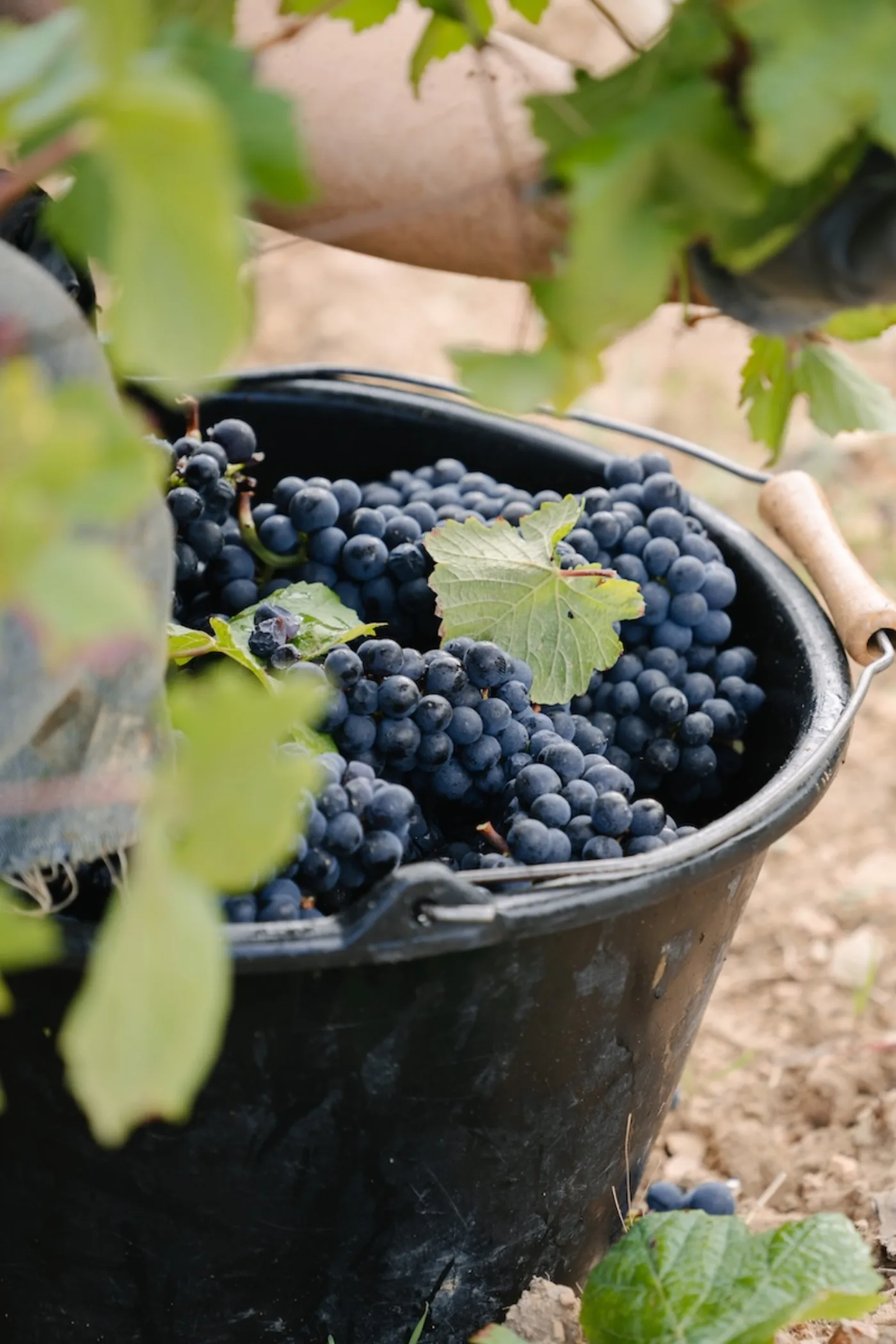
The harvest is entirely by hand, in keeping with family tradition. Every bunch is picked with care, then taken to the cellar where a team of six takes turns at the sorting table. Berry by berry, the grapes are inspected to set aside any damaged or under-ripe fruit. That demand keeps only the best of the crop.
03
Winemaking
The grapes are fully destemmed, then moved into tank by gravity for a cold maceration. Fermentation is natural, on the indigenous yeasts present on the grapes and in the cellar. Intervention stays minimal, two pump-overs a day. Vatting off comes after fifteen to twenty days, followed by pressing.
04
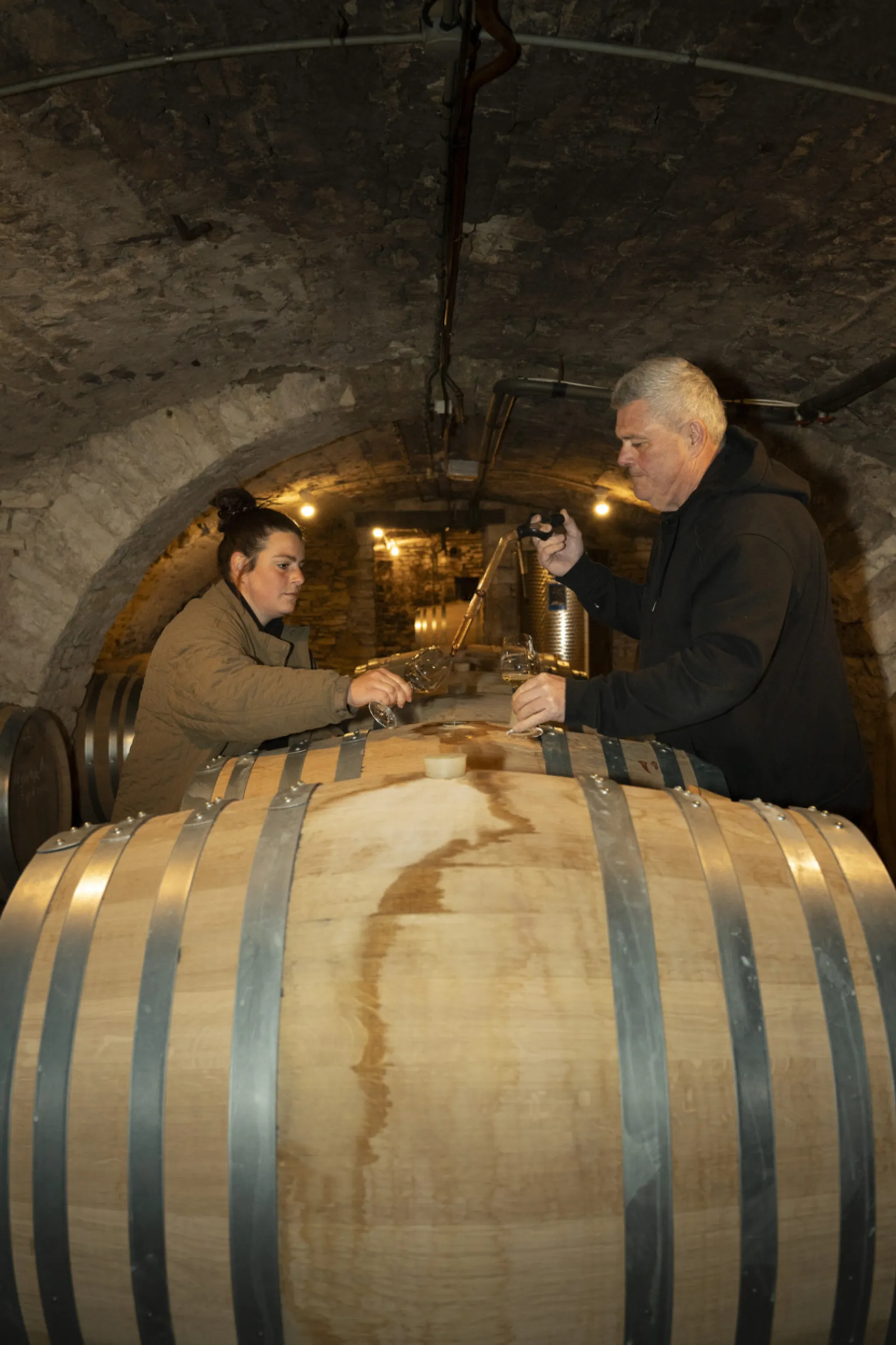
The barrel cellar
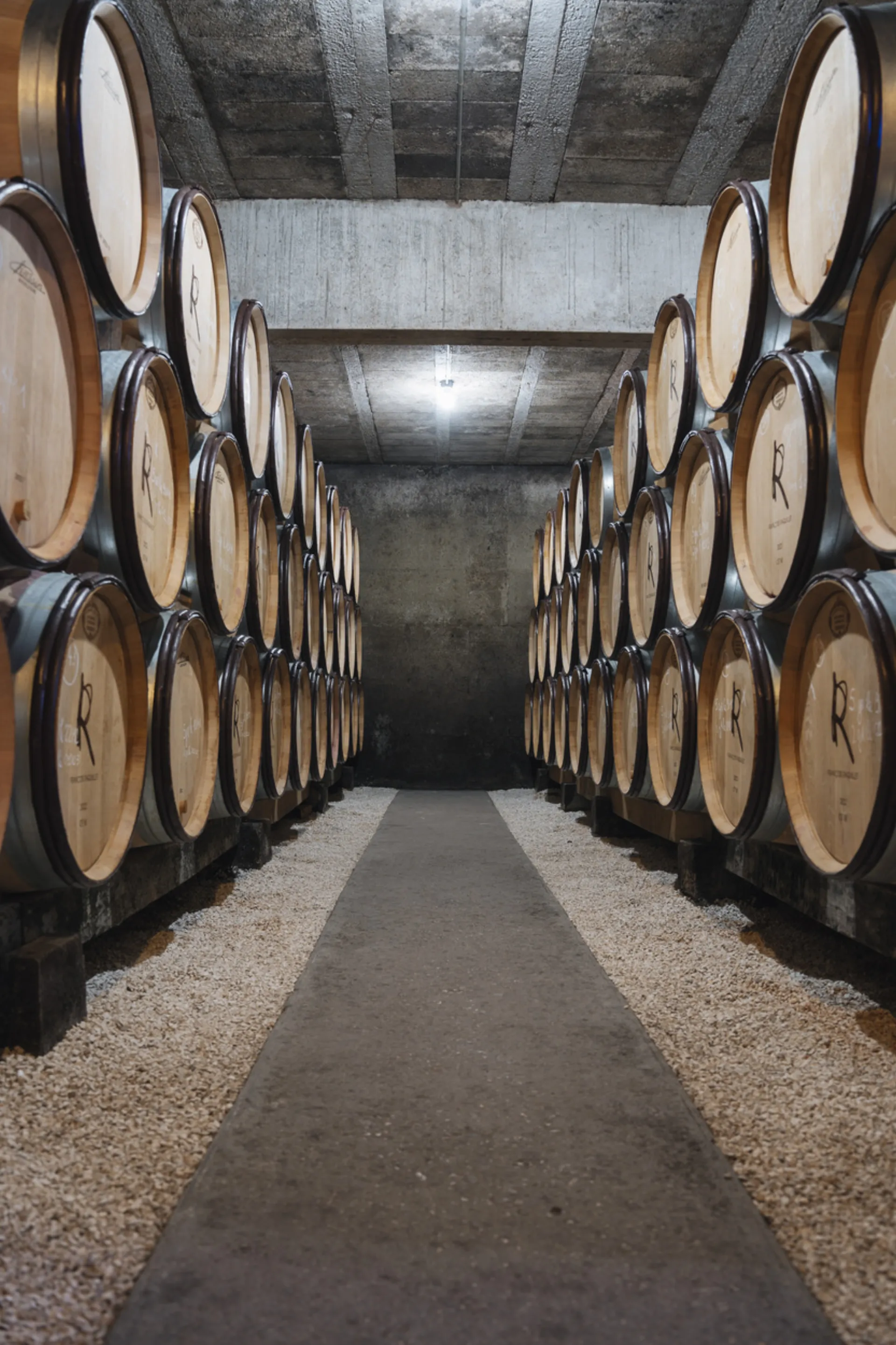
The estate vinifies only in French oak. The barrel stock is renewed by thirds, a third new each year, and the oldest are three years old. Each wine has its own ratio of new oak, detailed on its technical sheet.

Our commitment